EICR in Walton-on-Thames
Bring it Ohm Electrical Solutions provides thorough Electrical Installation Condition Reports (EICRs) across Walton-on-Thames and surrounding areas. Paul, a fully qualified local electrician, methodically inspects and tests your fixed electrical installation to assess its safety, identifying deterioration, damage, and non-compliance with British Standards. Whether you are a homeowner seeking peace of mind, a landlord fulfilling statutory obligations, or a buyer assessing an older property, you receive a clear, factual report and direct guidance on any necessary next steps.
- Calibrated, modern electrical test instruments
- Transparent pricing: standard domestic base rate of £60 per consumer unit plus £30 per circuit
- Direct communication with Paul from initial enquiry to final report
- Fully compliant with BS 7671 (IET Wiring Regulations)

EICR Quote Request
What is an EICR?
An Electrical Installation Condition Report (EICR) is an official document issued following the detailed periodic inspection and testing of an existing electrical installation. Often searched for as an "EICR certificate" or "landlord electrical safety certificate", it is formally an in-depth condition report rather than a certificate for newly installed work.
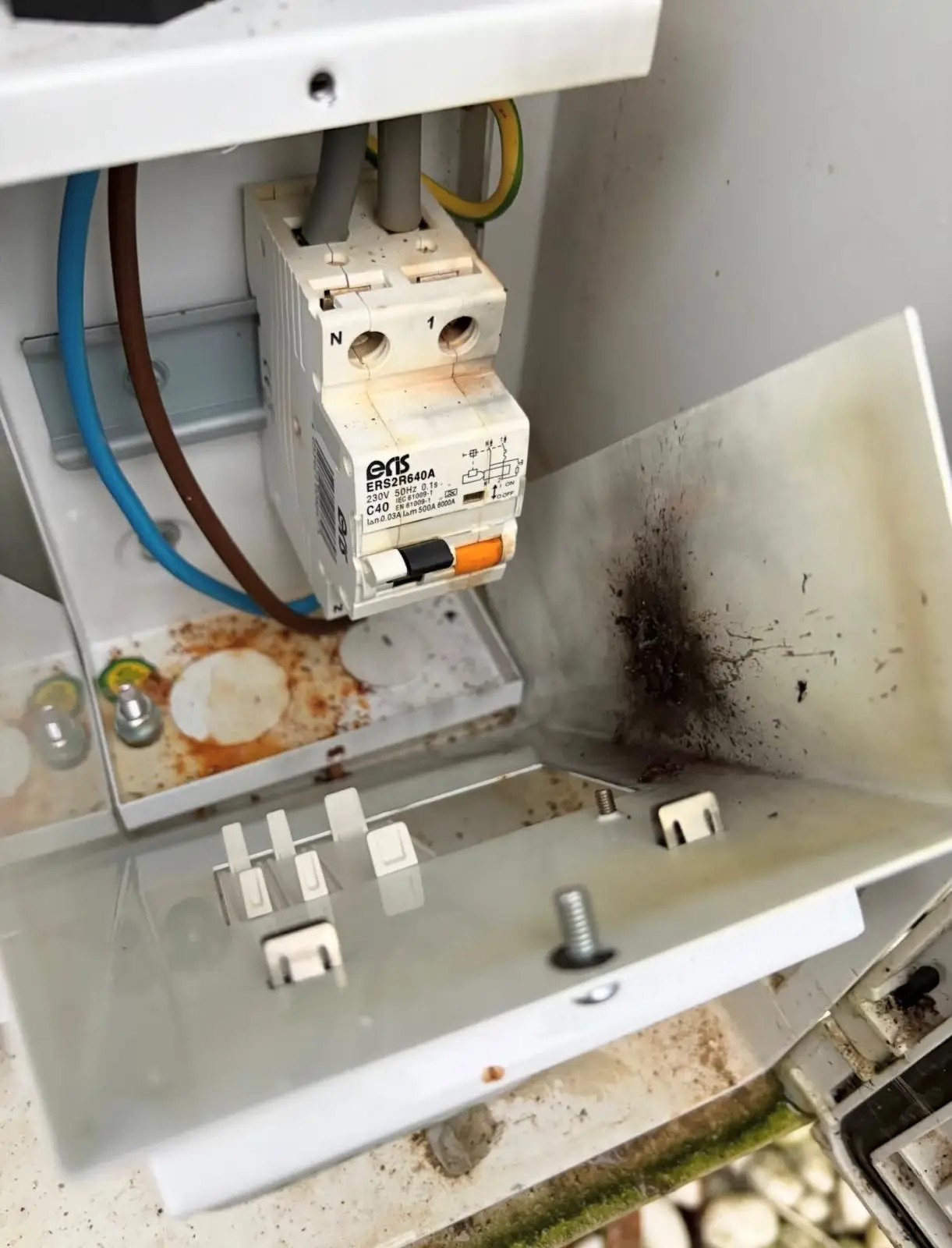
The report establishes whether the electrical installation is in a satisfactory condition for continued safe use. It highlights safety concerns such as degraded cabling, overloaded circuits, inadequate earthing, or absent shock protection.
Because an EICR assesses an occupied property, the inspection focuses on accessible fixed wiring, fittings, and distribution equipment. Cabling hidden inside walls, beneath solid floors, or within sealed roof voids cannot be visually checked without causing damage to the building fabric. Paul evaluates these concealed areas using instrument testing and records any agreed limitations clearly within the final document.
Who Needs an EICR?
Different property owners require an electrical inspection for distinct practical and legal reasons:
Homeowners
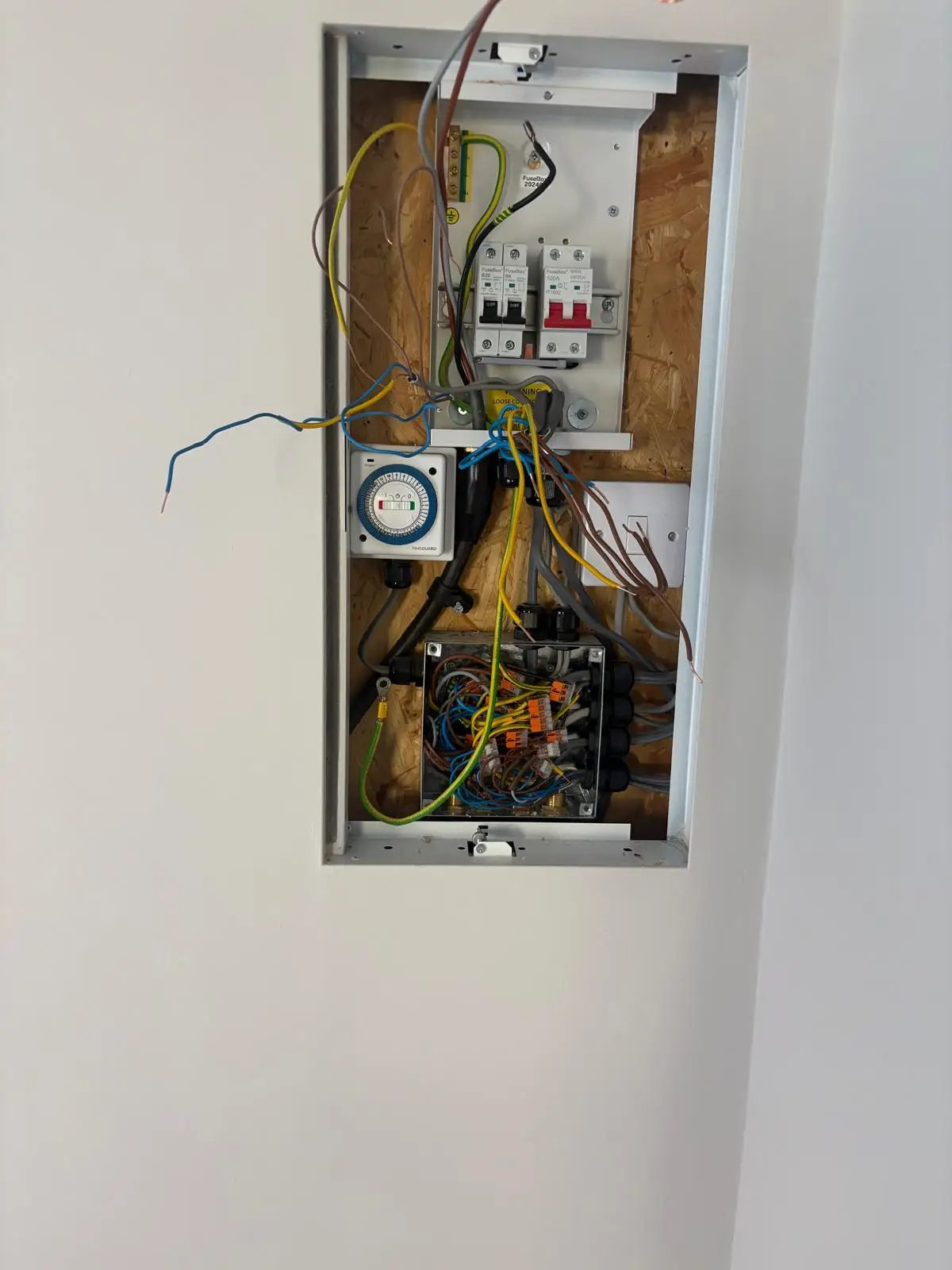
Electrical installations age naturally through heat, vibration, and general usage. Homeowners arrange an EICR to confirm that ageing wiring remains safe, to check an older consumer unit, or to assess the installation before undertaking extensions, loft conversions, or rewiring work.
Landlords
Under the Electrical Safety Standards in the Private Rented Sector (England) Regulations 2020, private landlords in England must ensure their electrical installations are inspected and tested by a qualified person at intervals of no more than five years. Landlords must provide a copy of the report to existing tenants within 28 days of the inspection, and to prospective tenants before occupation. Where the report requires remedial work or further investigation, the landlord must ensure it is carried out within 28 days, or any shorter period specified in the report.
Property Buyers
Standard homebuyer and mortgage surveys assess visible structural features, but surveyors do not test electrical circuits. Commissioning an EICR before exchanging contracts reveals hidden wiring defects, dangerous alterations, or outdated fuse boards, giving buyers the factual evidence needed to budget for urgent repairs or renegotiate purchase terms.
Customer Reviews
"Paul came and quoted for some electrical work I needed doing very quickly. He’s very pleasant and straightforward to deal with and the work has been completed to a high standard. I would definitely use Paul again."
"Great communication, arrived on time, very quick, efficient and clean, will use again"
"Highly recommend Paul for any electrical work. He was clear and upfront about everything from the start, turned up when he said he would, and completed the job to a really high standard. Professional, reliable, and great quality workmanship. Would definitely use him again."
"Paul at Bring It Ohm Electrical Solutions is great. He’s friendly, honest, reliable, and takes the time to explain everything clearly, which I really appreciated. It’s refreshing to find someone you can genuinely trust. I wouldn’t use anyone else for electrical work going forward and would highly recommend his business."
"Paul installed an extended a plug for us inside our kitchen cabinet and the whole experience was great! He arrived on time, was kind, communicative, and completed the work to a high standard. Everything was left tidy and neatly finished, and we’ll be continuing to use his services from here, on out. Thank you Paul!"
"Paul was extremely accommodating and worked in a tidy clean professional manner, he fitted a EV Charger in the exact way requested and although we hit some issues along the way his communication and patience was spot on. Thank you very much Paul"
"Fixed a problem with my fuse box the same day - friendly and reliable. Would recommend!"
How Domestic EICRs Are Quoted
Domestic EICR pricing is based on the size and complexity of the installation rather than a vague flat rate. For standard domestic properties, pricing is calculated from a clear baseline:
- Base fee £60 per consumer unit
- Circuit fee £30 per circuit
This circuit-based structure ensures you only pay for the actual volume of testing required. The final quotation can vary depending on three practical factors:
-
1
Property Size and Layout: Substantial properties or detached outbuildings require additional time to locate and test distant fittings.
-
2
Circuit Labelling: When a consumer unit is clearly labelled, testing moves efficiently. When circuits are unlabelled or incorrectly marked, Paul must spend extra time tracing each individual circuit path safely before testing can begin.
-
3
Assistance Requirements: Where access is restricted or an installation requires an additional pair of hands to test safely and efficiently, a second person may be needed to assist with the inspection.
Paul discusses these details with you beforehand so that the scope of the inspection and the expected cost are clear before the visit. Where access or testing is limited on the day, or unexpected circuit tracing is needed, Paul explains how this affects the inspection and the cost.
What Paul Inspects and Tests
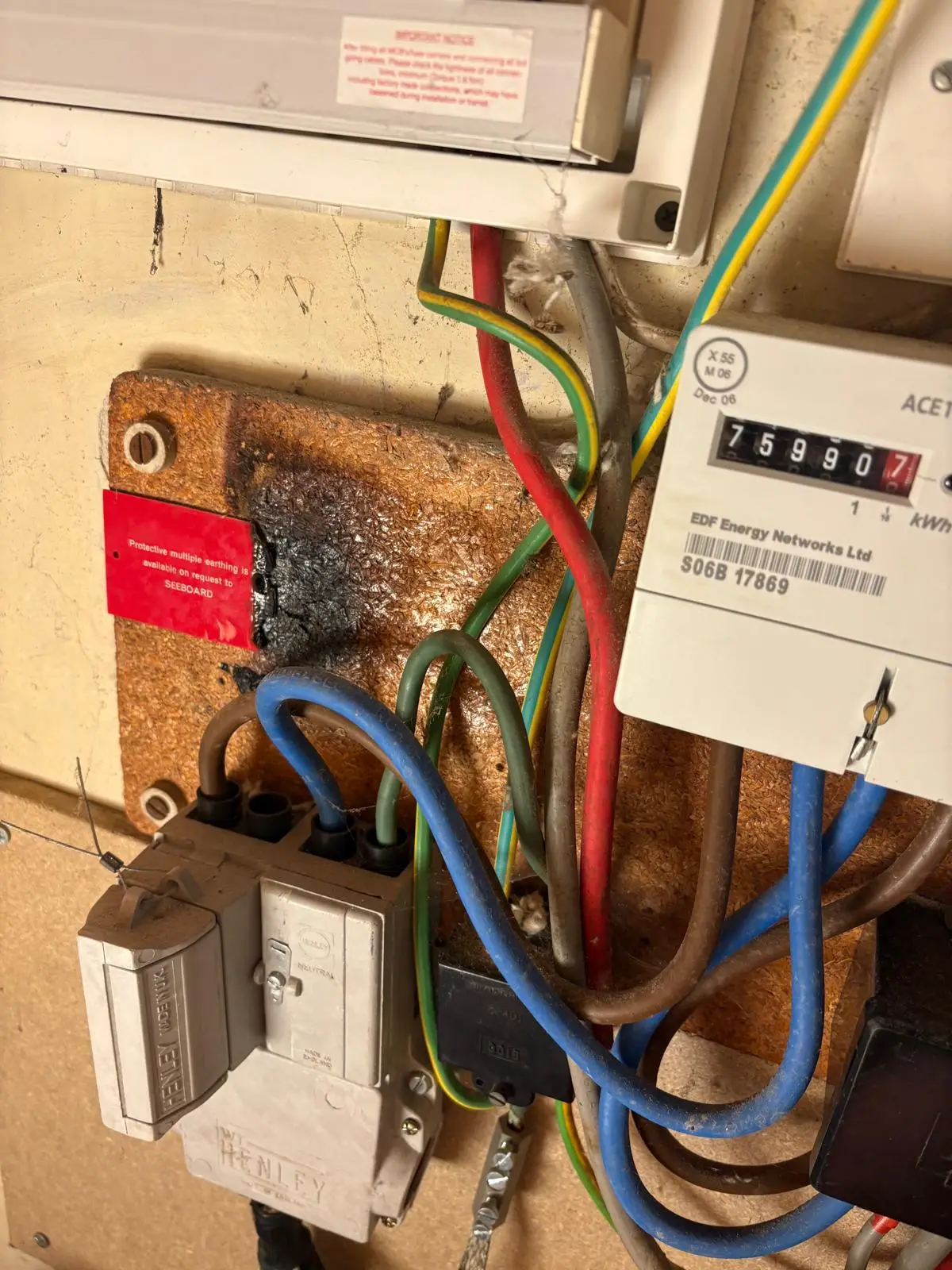
An EICR examines the fixed electrical installation that distributes power around the property. It does not assess portable plug-in appliances, which fall under portable appliance testing (PAT).
During the inspection, Paul evaluates the following core areas:
-
Consumer Unit and Distribution Equipment
Checking the condition of the enclosure, main switch, fuses, Miniature Circuit Breakers (MCBs), and Residual Current Devices (RCDs or RCBOs) to ensure they disconnect the supply correctly during a fault.
-
Earthing and Protective Bonding
Verifying that main earthing conductors and bonding connections to metallic water and gas pipework are present, properly sized, and intact.
-
Cabling and Circuit Routes
Checking accessible cabling for mechanical damage, ageing insulation, inadequate support, or exposure to excessive heat.
-
Accessories and Terminations
Inspecting a representative sample of light switches, socket outlets, fused spurs, and luminaires for secure connections, correct polarity, and thermal damage.
-
Instrument Testing
Carrying out calibrated electrical tests, including earth continuity, insulation resistance (checking for leakage across cable insulation), polarity, and earth fault loop impedance.
-
RCD Performance
Testing residual current devices using dedicated test instruments to verify that they trip within the required milliseconds under fault conditions.
Testing covers the circuits that can be safely accessed and tested on the day, with any inaccessible rooms, locked cupboards, or sensitive electronic loads noted as agreed limitations.
What Happens During the Visit
A structured inspection ensures minimal disturbance to the property while gathering accurate test data:
-
1
Initial Review and Scope
Paul confirms the property layout, locates the consumer unit and incoming supply equipment, checks for solar or battery additions, and notes any agreed limitations.
-
2
Access and Preparation
Paul establishes safe working access to the consumer unit, sockets, and lighting points across the property.
-
3
Power Isolation
The electrical supply must be turned off for periods during the visit to permit safe physical inspection and instrument testing. Paul provides advance notice before isolating circuits so sensitive equipment and computers can be shut down safely.
-
4
Physical Inspection and Instrument Testing
Paul conducts visual assessments alongside dead and live electrical testing on the circuits within the agreed scope, methodically logging values on his test instruments. Any circuits that cannot be tested are recorded as limitations in the report.
-
5
Initial Findings Discussion
Before leaving, Paul summarises the immediate findings, explains whether any urgent hazards were detected, and outlines when the formal written report will be delivered.
Understanding EICR Results
An EICR concludes with an overall assessment of either Satisfactory or Unsatisfactory. If an installation has any observation classified as C1, C2, or FI, the overall outcome must be recorded as Unsatisfactory.
Observations are categorised using four standard national classification codes:
| Code | Plain-English Meaning | Impact on Report | Action Needed |
|---|---|---|---|
| C1 | Plain-English Meaning Danger Present: Immediate risk of electric shock or fire. | Impact on Report Unsatisfactory | Action Needed Urgent remedial action required immediately to make safe. |
| C2 | Plain-English Meaning Potentially Dangerous: Serious defect that could become hazardous during a fault. | Impact on Report Unsatisfactory | Action Needed Urgent remedial action required. |
| C3 | Plain-English Meaning Improvement Recommended: Non-compliance with modern regulations that is not currently dangerous. | Impact on Report Satisfactory (if no C1/C2/FI exists) | Action Needed Optional safety improvement; does not fail the report. |
| FI | Plain-English Meaning Further Investigation Required: An anomaly or hidden circuit issue that could not be fully resolved within the visit. | Impact on Report Unsatisfactory | Action Needed Investigation must be completed without delay. |
An observation code describes what has been found and its level of risk; it does not automatically specify the repair technique or its cost. The code given to each observation depends on the actual circumstances Paul finds on inspection, including how that part of the installation is likely to be used, and on his judgement as the inspector.
What Happens if Problems Are Found?
If your property receives an Unsatisfactory result, Paul explains exactly what the observation codes mean so you understand the underlying issue.
Paul distinguishes clearly between two distinct requirements:
Further Investigation (FI)
Carried out when a circuit route, hidden junction, or unexpected reading requires additional tracing to understand the hazard.
Remedial Work
Practical repairs to correct identified defects, such as replacing a broken accessory, installing modern circuit breakers, improving earthing, or rewiring a damaged circuit.
Remedial repairs are not included in the original EICR inspection fee. Paul provides a separate, transparent written quotation detailing the required corrective work.
Remedial Work, Accountability, and Installation Guarantees
An EICR records the safety and condition of an electrical installation at the time of testing. A Satisfactory EICR confirms that the system was assessed as safe for continued use on that date; it does not act as an insurance policy, warranty, or guarantee against future electrical faults developing elsewhere in the property's wiring.
Where remedial work is required to rectify defects, Paul approaches repairs and accountability with complete transparency:
-
Inspected and Tested Remedial Work: Remedial work is inspected and tested, with the appropriate certificate issued where required.
-
Accountability for Completed Work: Paul stands behind his workmanship. If a fault arises as a direct result of the specific repair or replacement work he has carried out, he takes full responsibility for putting it right.
-
Separate or Unrelated Faults: Because electrical systems contain dozens of interconnected components and ageing cables behind walls, an unrelated fault that develops later on a different part of the installation is not covered by previous remedial repairs. Any new, separate issue requires independent investigation and will be quoted for on its own merits.
This clear distinction ensures you always know where responsibility lies, without misleading promises of blanket warranties across an entire existing wiring system.

EICR Versus Other Electrical Documents
Electrical paperwork serves specific purposes depending on whether work is being tested, altered, or newly built:
Electrical Installation Condition Report (EICR)
An inspection report evaluating the condition of an existing, already installed electrical system. It does not certify new construction or alterations.
Electrical Installation Certificate (EIC)
A safety certificate issued following the installation of brand-new electrical work, such as a full property rewire, an entirely new circuit, or a replacement consumer unit.
Minor Electrical Installation Works Certificate (MEIWC)
A certificate issued for additions or alterations to an existing circuit that do not create a new circuit, such as adding a socket to an existing circuit.
You cannot use an EIC to assess an old installation, and an EICR cannot serve as certification for newly installed wiring.
Service Areas
Based in Walton-on-Thames, Bring it Ohm Electrical Solutions delivers independent, methodical EICR inspections across the local borough of Elmbridge and neighbouring towns:
- Walton-on-Thames
- Hersham
- Weybridge
- Esher
- Claygate
- Cobham
- Oxshott
- East Molesey
- West Molesey
Local coverage helps with convenient booking times, and Paul confirms when you can expect your completed digital report.
Why Choose Bring it Ohm Electrical Solutions for Your EICR
An electrical inspection must be honest, thorough, and clearly explained. Property owners and managers work directly with Bring it Ohm Electrical Solutions for consistent standards:
-
Direct Contact with Paul: You deal directly with the qualified electrician who visits your home, tests the circuits, and produces the report.
-
Transparent Pricing Structure: Domestic inspections are priced openly at £60 per consumer unit plus £30 per circuit, with clear allowances for property size, labelling, or assistance.
-
Clear, Plain-English Explanations: Technical observations are clearly explained so you understand which items represent genuine safety hazards and which are minor advisories.
-
Thorough, Independent Inspection: Paul conducts genuine, unhurried testing in strict accordance with BS 7671, avoiding rushed visual-only walkarounds.
-
Fair Remedial Accountability: Remedial work is inspected and tested, with the appropriate certificate issued where required, and Paul takes personal responsibility for the work he carries out, alongside transparent quotations for any unexpected separate repairs.
Frequently Asked Questions
What does an EICR check?
An EICR checks the safety of a property's fixed electrical installation, including the consumer unit, protective devices, earthing, bonding, cables, switches, sockets, and lighting circuits.
How much does a domestic EICR cost?
A domestic EICR is usually priced at £60 per consumer unit plus £30 per circuit, with final adjustments depending on property size, whether circuits are clearly labelled, and whether a second person is needed to assist with testing.
What do C1, C2, C3 and FI mean?
These are standard observation codes where C1 indicates immediate danger, C2 indicates potential danger requiring urgent repair, C3 recommends safety improvements to meet modern standards, and FI calls for further investigation into an unresolved circuit anomaly.
What makes an EICR unsatisfactory?
An EICR is deemed unsatisfactory whenever an inspector identifies at least one C1, C2, or FI observation across the installation.
Does a satisfactory EICR provide a warranty against future wiring faults?
No, a satisfactory EICR assesses the safety condition of the electrical system at the time of inspection and does not serve as an ongoing warranty against future faults developing in the wiring.
What warranty applies if Paul carries out remedial repairs?
Remedial work Paul carries out is inspected and tested, with the appropriate certificate issued where required, and he takes full responsibility for putting right any fault caused directly by his workmanship, while separate or pre-existing faults elsewhere on the property require independent investigation.
How long does an EICR take?
An EICR typically takes between two and four hours for a standard domestic property, depending on the number of circuits, property size, and how clearly the consumer unit is labelled.
How often should my property have an EICR?
Rental properties in England must legally be inspected at least once every five years, whereas owner-occupied homes are generally recommended to undergo an inspection every 10 years or upon a change of occupancy.
What information should I provide when requesting a quote?
When requesting a quote, provide your property type, postcode, the number of consumer units, approximate number of circuits, and whether the fuse board is clearly labelled.
Arrange Your Electrical Inspection
To book an EICR or request a tailored quotation for your property in Walton-on-Thames or the wider Elmbridge area, contact Paul directly.
Call Paul on 07885 694524 or use the link below to provide your property details and secure an inspection date.
Request an EICR Quote